|
Because sharp enough ... usually is not |

|
Hori Hori Gardening Knives
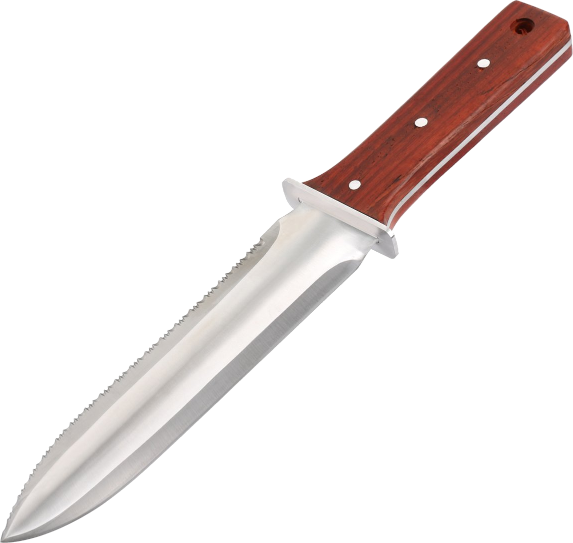
Hori Hori Gardening Knife
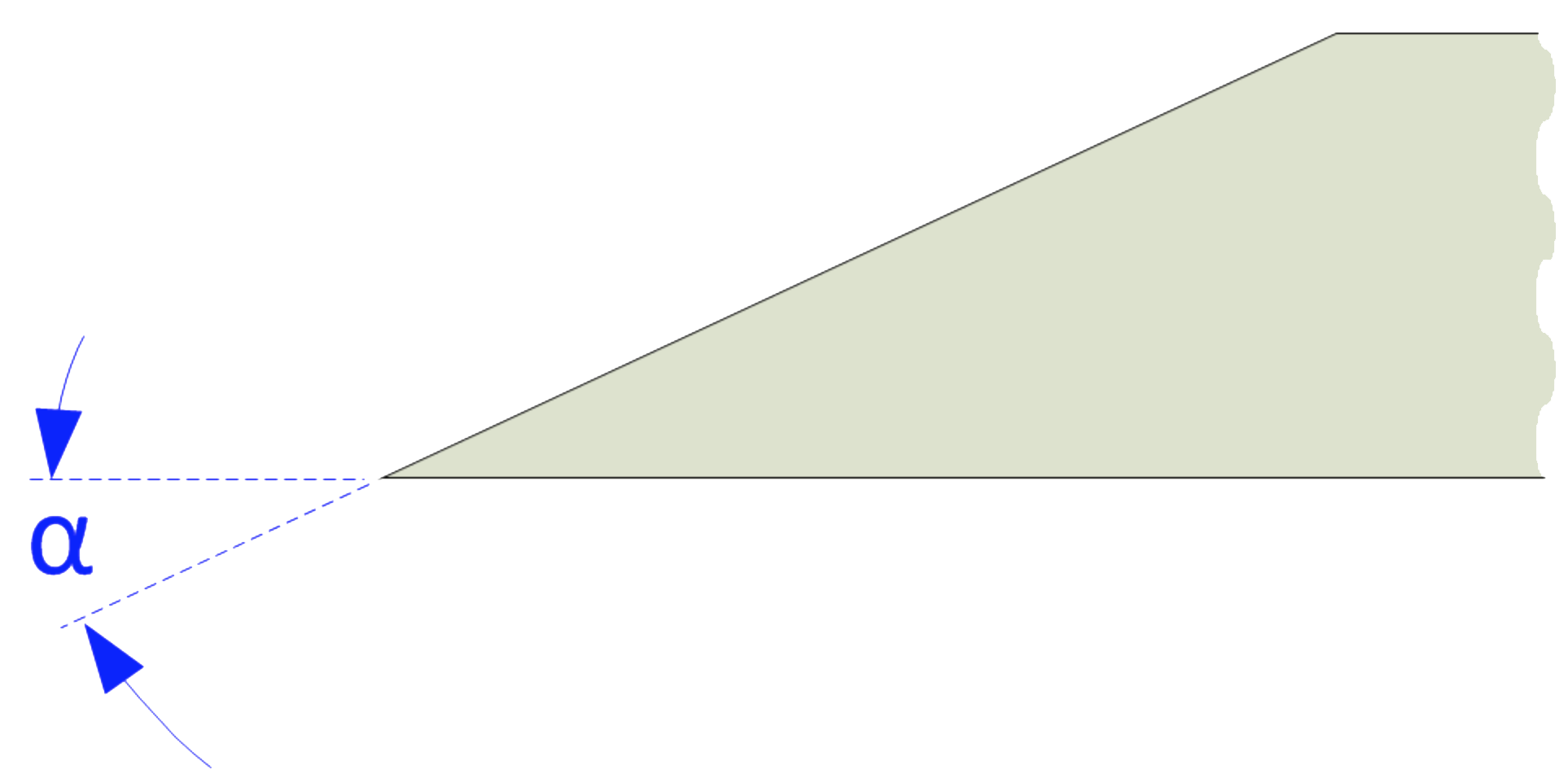
Edge Angle |
|
I have never had so many good ideas day after day as when I worked in the garden. John Erskine |
The Japanese Hori Hori Gardening Knives, also known as Soil Knives, are used in the garden for many activities, including digging, cutting, weeding, & planting. ("Hori hori" means "to dig" in Japanese.)
Guidelines shown below are for Included Angles (α). The two edges could be sharpened differently, but that is not typically done.
If one side has a serrated edge, and you wish to keep it that way, consult the page on Serrated Edge Kitchen Knives.
There can be a debate about how sharp the hori hori knife should be. Notes regarding this are below in the Notes & Comments section.
|
General Guidelines |
|||||
|---|---|---|---|---|---|
| α |
Micro |
Sharpness |
Notes |
||
| 20° | +5° |
to
|
The inside edge will need to be deburred using high grit sandpaper, a machinist's hand file, or a sharpening stone. The use of a micro/secondary bevel makes the re-sharpening easier and faster, particularly if done in the field. 
Gut Hook Note: Some blades have a hooked blade used for cutting twine. This is similar to a hunting knive's gut hook used splitting the skin on a game animal when butchering in the field. Sharpening this concave edge requires a round slip stone or sandpaper wrapped around a dowel rod. This gut hook should probably be sharper so that the twine can be easily sliced (i.e., towards a sharpness of a 5), even if the rest of this tool is not as sharp. |
||
The gardener needs to decide how sharp the hori hori knife should be based on activities for which the tool will be used. Some of the decision criteria worth considering are outlined below.

click on the gray block to see more
If the gardener wants to use the hori hori knife for these activities, then making it less sharp is recommended.

click on the gray block to see more
If the gardener wants to use the hori hori knife for these activities, then making it quite sharp is recommended.
Cautions: depending on how the gardener uses the tool's sheath for encasing the blade, having a very sharp blade makes it easy for the gardener to:

Morakniv knife
Alternatively, the gardener could use a different tool such as a fixed blade knife like a Morakniv or Bowie knife for these activities.
If you choose to use a machinist’s hand file,
Adding a 5° micro bevel is a very useful approach when using a machinist’s hand file to sharpen the hori hori knife.
If you need to sharpen the serrated edge; a round file can help with that endeavour.
I prefer this method as it is fast and easy, allowing me to get back to gardening sooner.
Grindstone: The Tormek SG-250 grindstone works well for sharpening this tool.
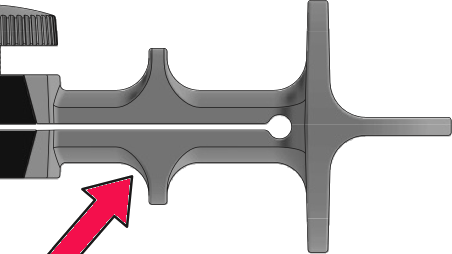
KJ-45 Bottom Stop
Jig: The KJ-45 jig can hold this tool acceptably, but you need to use the bottom stop (as indicated in the picture to the right). This makes setting the angle far easier.
Because the blade is curved, a platform jig will probably not work well, and the resulting edge will be unevenly ground. This is not recommended.

Hori Hori knife in a KJ-45 jig
USB Position: Grinding the outside edge using the Tormek's horizontal position (with the grindstone rotating away from the edge) is recommended. This is necessary as the angle is pretty steep due to the curvature of the blade. My experience trying to use the vertical position for the USB caused the blade to be grabbed and just was not a good idea.
The picture to the left shows a hori hori knife (blue) being held by a KJ-45 knife jig. The red dot is the USB.
Note: Because the blade is curved, the KS-123 does not work for this application.
Using a bench or angle grinder is not recommended as this will surely overheat the tool, removing the temper from the edge. Additionally, the shaping of the edge is difficult to control.
The micro bevel makes the resharpening of this tool easier. If you sharpen the tool using a machinist's hand file, this is recommended. It is less critical if you use a Tormek grinder for the sharpening.
